How to Choose the Best Tooth Floss for Cleaner Teeth and Healthier Gums
For many people, flossing feels uncomfortable, time-consuming, or easy to skip altogether.
Recent Blogs
- How a Plaud Coupon Makes Innovative AI Note-Taking More Affordable
- A Comprehensive Guide To Find The Best Spare Parts For Cars
- Exploring Communication Overseas
- Make A healthy Work From Home Environment
- Five Best Toys Your Birds Will Love
- Choose The Perfect Canister Vacuum Cleaner For Your Home
- Elevate Your Patio Design With Bluu
May 26 12
Brushing twice a day sounds like enough until your dentist asks one simple question:
“So, how often do you floss?”
For many people, flossing feels uncomfortable, time-consuming, or easy to skip altogether. Some floss shreds between teeth. Others hurt sensitive gums or feel difficult to maneuver. And with so many products on the market, figuring out the best tooth floss can quickly become confusing.
On top of that, more consumers are now paying attention to sustainability and looking for eco-friendly options like biodegradable tooth floss that reduce plastic waste without sacrificing effectiveness.
The good news is that flossing doesn’t have to feel frustrating anymore. Once you understand the different types of tooth floss and what works best for your needs, maintaining healthy teeth becomes much easier and more consistent.
Why So Many People Avoid Flossing
Most people know flossing matters, yet many still avoid doing it regularly.
Why?
Because traditional flossing often comes with common frustrations:
- Floss that snaps or frays
- Bleeding or sensitive gums
- Difficulty reaching back teeth
- Uncomfortable hand positioning
- Lack of time or motivation
For people with tight teeth spacing or dental work, the process can feel even more inconvenient.
Over time, skipped flossing allows plaque and food particles to build up in places that toothbrushes simply can’t reach.
What Happens When You Don’t Floss Regularly?
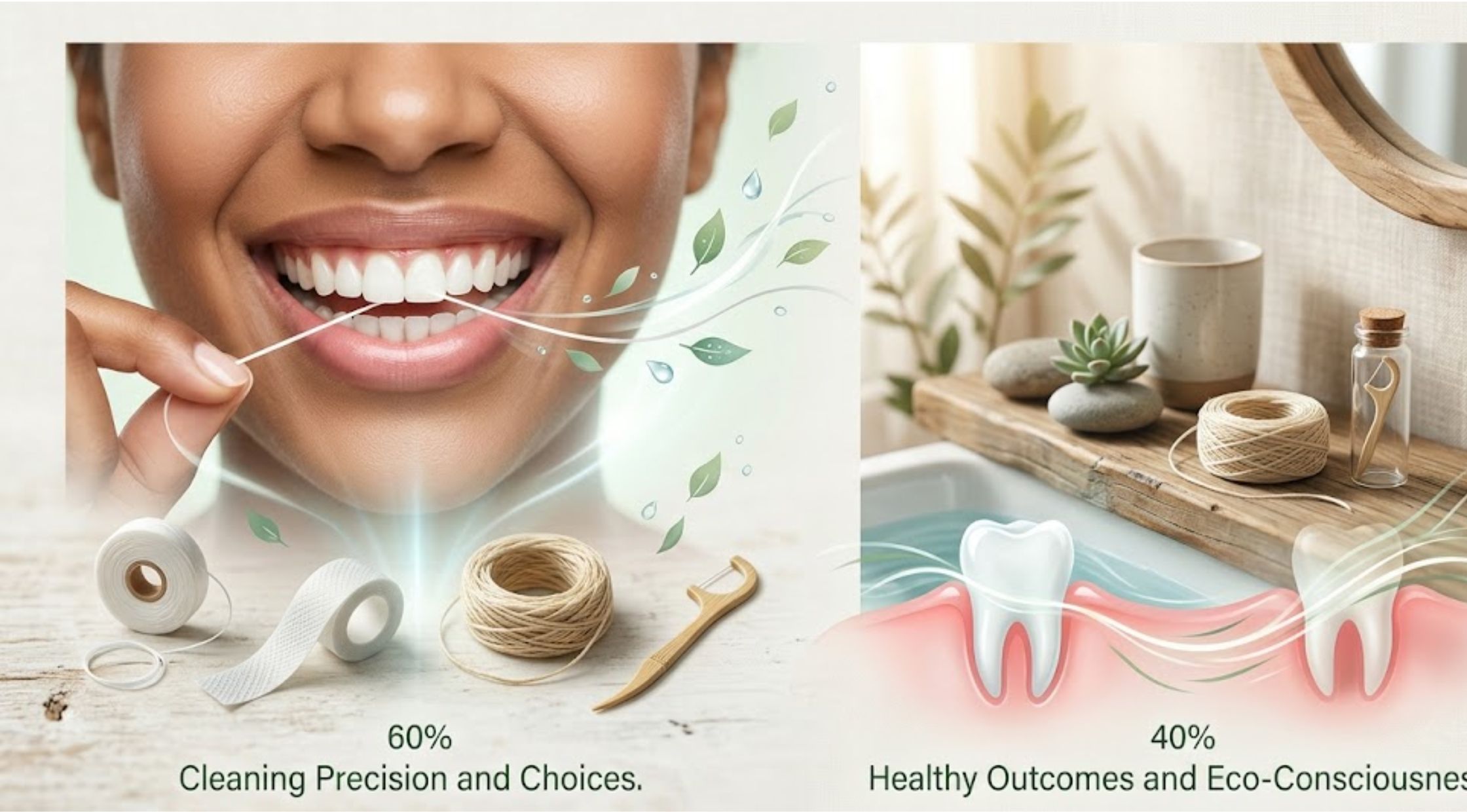
Brushing only cleans around 60% of tooth surfaces.
The spaces between teeth are where plaque, bacteria, and food debris tend to collect. Without flossing, that buildup can contribute to:
- Gum inflammation
- Bad breath
- Tooth decay
- Increased plaque buildup
- Gum disease over time
The issue isn’t always poor brushing habits; it’s often using the wrong flossing method or product.
That’s why understanding the different types of tooth floss can make a huge difference in both comfort and consistency.
Understanding the Different Types of Tooth Floss
Waxed Floss
Waxed floss is coated to help it slide more easily between tight teeth.
Benefits include:
- Less shredding
- Easier handling
- Better for tightly spaced teeth
This is one of the most common options people choose when searching for the best tooth floss for everyday use.
Unwaxed Floss
Unwaxed floss is thinner and may create a squeaking sensation against clean teeth.
Some people prefer it because it feels more natural, though it may fray more easily between crowded teeth.
Dental Tape
Dental tape is broader and flatter than traditional floss.
It’s often more comfortable for people with:
- Sensitive gums
- Wider tooth gaps
- First-time flossing habits
Water Flossers
Water flossers use pressurized water to clean between teeth.
They’re popular among people with braces or gum sensitivity, though some users still prefer traditional floss for precision cleaning.
Biodegradable Floss
As sustainability becomes more important, biodegradable tooth floss is gaining popularity.
Unlike conventional plastic floss, eco-friendly floss options are often made from natural silk, bamboo fibers, or compostable materials.
This allows users to reduce waste while maintaining better oral hygiene habits.
Why Finding the Right Floss Matters
The biggest reason people stop flossing is discomfort.
When flossing feels difficult, painful, or messy, consistency disappears.
Choosing the best tooth floss isn’t just about cleaning efficiency it’s about finding a solution that fits naturally into your daily routine.
Comfort and convenience often determine whether people floss occasionally or actually stick with the habit long term.
Practical Tips for Better Flossing Habits
Start Small
If daily flossing feels overwhelming, begin with a few times per week and build consistency gradually.
A sustainable habit matters more than perfection.
Be Gentle
Aggressive flossing can irritate gums and create discomfort.
Instead:
- Glide floss carefully
- Curve around each tooth
- Avoid snapping against gums
Proper technique improves both comfort and effectiveness.
Choose Tools That Simplify the Process
Modern oral care tools are designed to remove many of the frustrations associated with traditional flossing. That’s one reason innovative brands are attracting attention in conversations around the best tooth floss solutions available today.
A Smarter Approach to Flossing
One company helping modernize oral care routines is Flaus.
Rather than relying solely on traditional string floss, Flaus focuses on making flossing easier, faster, and more comfortable through electric flossing technology.
For people who struggle with consistency or discomfort, this type of innovation can make daily flossing feel far less intimidating. Many consumers exploring different types of tooth floss are now considering alternatives that combine convenience with a better user experience.
And because sustainability matters to many buyers today, interest in products that align with eco-conscious habits, including biodegradable tooth floss options, continues growing as well.
Why More People Are Upgrading Their Oral Care Routine
Oral health habits are evolving.
Consumers today want products that are:
- Easier to use
- More comfortable
- Better designed
- Environmentally conscious
- Effective long-term
That’s why brands like Flaus are becoming part of conversations around smarter oral care routines rather than simply basic hygiene tools.
People increasingly value products that reduce friction and make healthy habits easier to maintain consistently.
The Lifestyle Benefits of Better Flossing
Consistent flossing doesn’t just improve dental checkups.
It can also contribute to:
- Fresher breath
- Healthier gums
- Greater confidence
- Cleaner feeling teeth
- Reduced plaque buildup
- Better long-term oral health
And when flossing feels easier and less time-consuming, it becomes far more likely to stick as a daily habit.
For many users searching for the best tooth floss, the real goal isn’t perfection it’s creating a routine that feels simple enough to maintain consistently.
That’s where modern solutions like Flaus can naturally fit into a healthier lifestyle.
Final Thoughts
Finding the right flossing solution can completely change the way you approach oral care.
Whether you’re comparing different types of tooth floss, searching for the best tooth floss for sensitive gums, or exploring more eco-friendly options like biodegradable tooth floss, the key is choosing a system that feels comfortable, practical, and sustainable for everyday use.
Healthy habits become easier when the tools supporting them are designed with real people in mind. And sometimes, a smarter oral care routine starts with something as simple as making flossing feel less like a chore.
Comment:
Your email address will not be published. Required fields are marked *